
How to Use Clay Towels to Remove Paint Contamination
Key Takeaways
Clay towels serve as a safer, faster alternative to traditional clay bars: flexible, durable and less likely to create scratches when handled correctly.
Sufficient lubrication is critical. Insufficient lubrication causes marring, swirl marks and paint‑surface damage.
Proper operating principles: straight passes, frequent folding, and full decontamination prepare paint for polishing, waxing or coating jobs.
Do clay‑treatments monthly or quarterly. Regular clay‑towel maintenance stops industrial fallout, road grime and brake dust from bonding permanently onto paintwork.
This guide walks you through safe paint‑surface decontamination workflows with clay towels, and how to judge when paint surfaces are ready for next‑stage care.
Why Paint Decontamination Requires Special Tools
Vehicle clear‑coat acts as primary defense against external damage. Loose dirt can be washed away by regular car‑washing, yet embedded contaminants like metal particles, road grime and industrial fallout stick onto paint and harden over time. These contaminants not only ruin gloss and texture, but also wear away clear‑coat layers gradually, bringing costly damage and reduced resale‑value.
Limitations of Regular Car Washing
Conventional car‑washing (two‑bucket or touchless) can only wash away surface dust and sand. Embedded paint‑surface contaminants survive shampoo‑and‑sponge washing. Over time they accumulate, making paint feel rough to touch and accelerating oxidation.
Clay towels Are Durable & Reusable
Clay towels feature bonded‑clay layers that resist crumbling or breaking apart. After each use, rinse clean and store properly for repeated treatments — cost‑effective for shops and private users alike.
The Step-by-Step Process
Prep: Wash and Dry Your Vehicle Thoroughly
Before applying clay‑towel treatment, you must remove loose dirt and grit on paint surfaces. Remaining grit will scratch paint when dragged by clay towels.
Start with pre‑rinse and pressure‑washer to flush loose debris. Next apply pH‑neutral car shampoo and high‑pile microfiber wash‑mitt for gentle cleaning. Work top‑down (save dirtier lower panels for last) to avoid re‑contaminating clean surfaces. Once washing finishes, wipe completely with waffle‑weave microfiber towels, to eliminate water spots and residual moisture interfering with decontamination work.
Gather Your Tools
Safe and effective clay‑towel work only requires a small set of simple supplies, most of which you can source from our Lewell product lineup:
- Professional‑grade clay towel (flexible, reusable, paint‑safe for clear‑coat)
- Dedicated clay‑lubricant spray (critical for scratch prevention; never use dry clay‑towel)
- 2‑3 clean microfiber towels (for applying lubricant and wiping residual residue)
Step 1: Thoroughly wash and dry (optional) Give your vehicle a full two‑bucket car‑wash to remove surface sand, mud and loose dirt. After washing, you may dry the car or keep paint wet. If you use dedicated clay‑lubricant spray, drying is optional; car‑wash‑solution can also serve as lubricant.
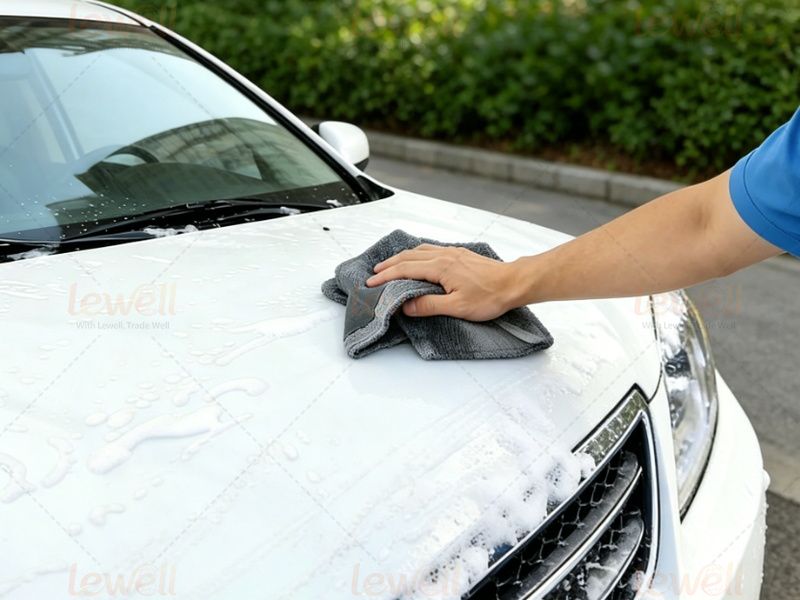
Step 2: Prepare the clay towel and lubricant Soak clay towel in clean water or dedicated lubricant to soften it (some products skip pre‑wetting, follow official product instructions). Spray dedicated lubricant evenly over your working area (e.g. one quarter of hood). Confirm paint surface stays sufficiently moist.
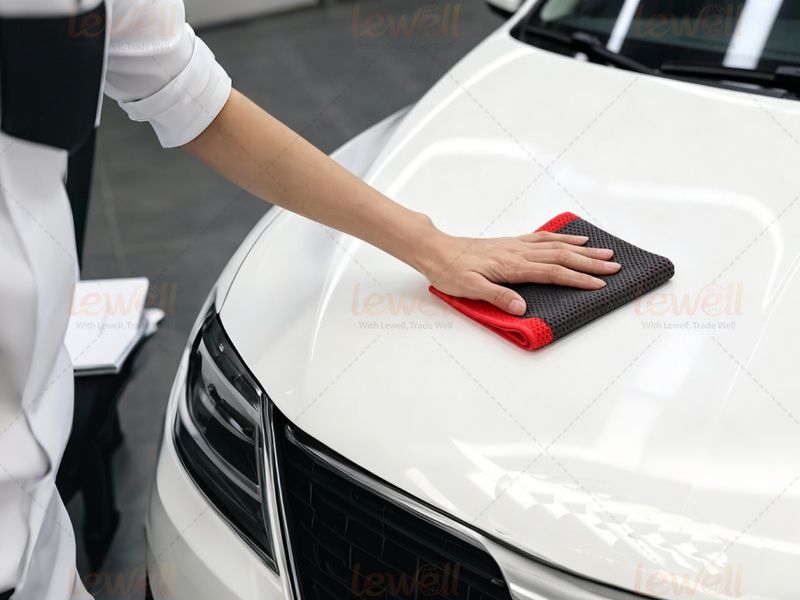
Step3: Glide with gentle pressure Lay the flat clay towel open in your palm. Apply light even palm‑pressure (avoid fingertip pressure). Glide in straight‑line motions over lubricated paint zones. Slight resistance means the towel is picking up embedded contaminants. When resistance fades and gliding becomes smooth, contaminants in this area are removed. Important tip: Do not press hard or scrub fast. Allow clay towel + lubricant to do most work. If you feel heavy resistance, lubrication is insufficient — stop work and spray more lubricant immediately.
Step4: Wipe and inspect After treating one area, wipe residual lubricant away with clean microfiber towel. Run your palm (covered by plastic film) over paint surface to confirm silky‑smooth texture. If rough gritty texture remains, repeat step2‑3.
Maintenance Tips to Reduce Contamination Buildup
You do not need clay‑treatment every week. Reasonable maintenance cycles prevent heavy‑duty contaminant bonding.
Monthly Light Checks
After car‑washing, slide your palm over paint. If you feel gritty texture, perform quick clay‑touch‑up.
Quarterly Full Decontamination
For daily‑driven vehicles, full clay‑treatment every 3‑4‑months keeps paint‑surface smooth.
Protect Against Fallout
Whenever possible, park away from construction zones, railway tracks and busy high‑traffic roads. Regular waxing creates protective barriers between paint and environmental contaminants.
Final Thoughts
Clay towels rank among the most practical tools in auto detailers’ toolkits. They turn rough contaminated paintwork into smooth glossy finish quickly, affordably and safely when used properly.
Our professional‑grade clay‑towels, lubricants and microfiber accessories work together to deliver reliable decontamination performance. Whether you run a detailing shop, work as a detailer, or are a private car‑owner, always wash thoroughly, lubricate generously and glide gently. With minimal effort, your paint maintains smooth bright gloss, ready for subsequent protection work.